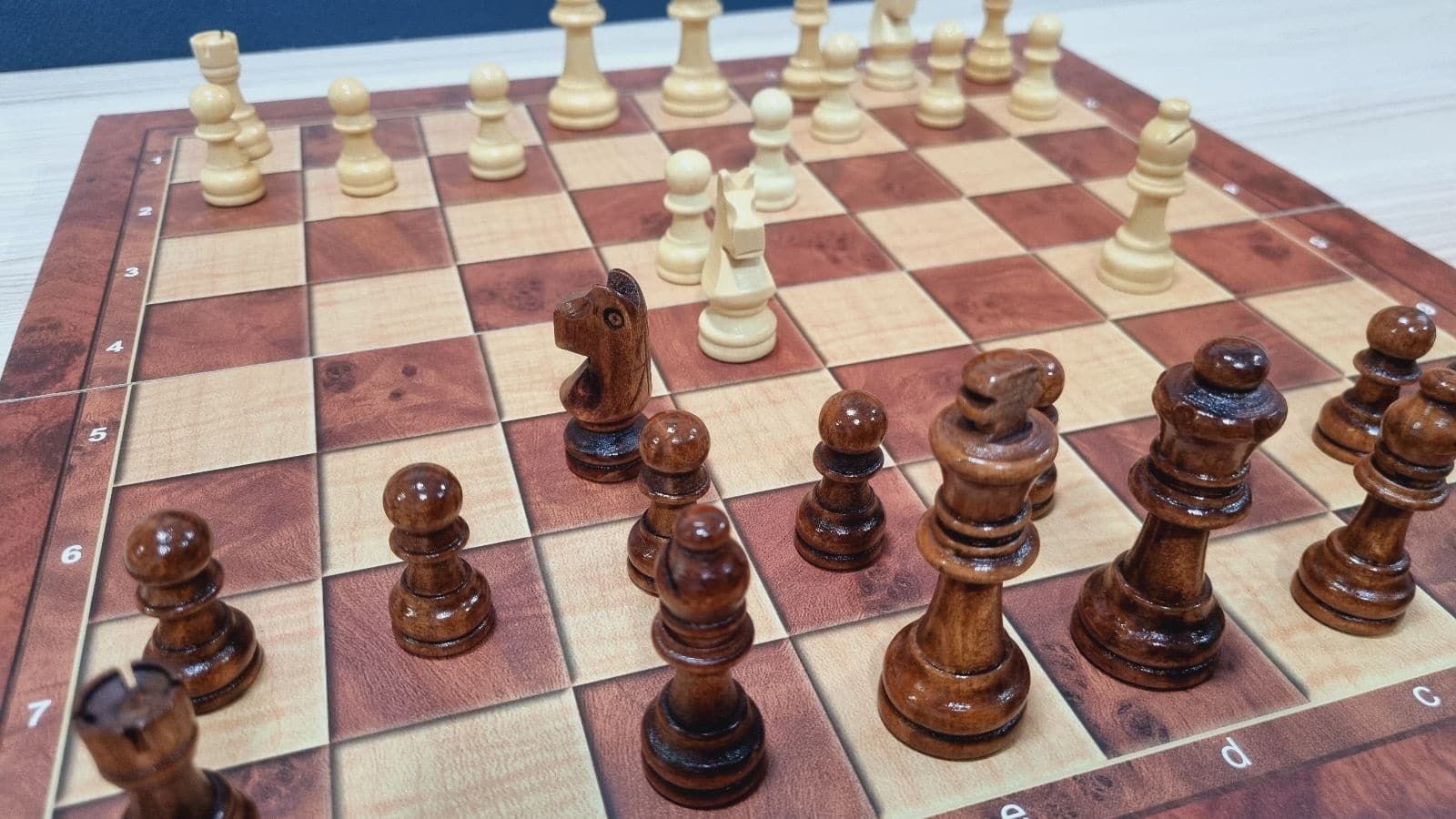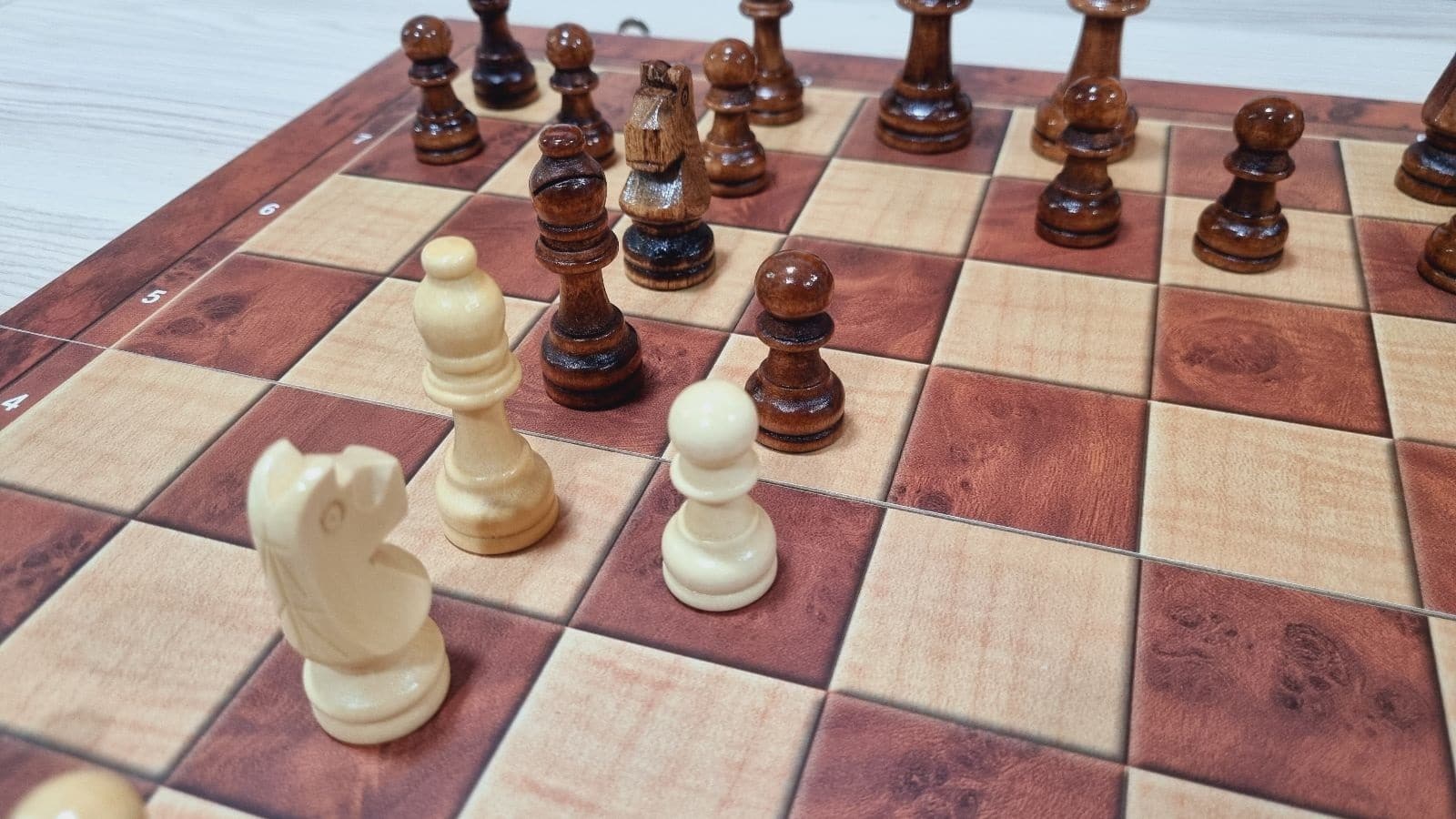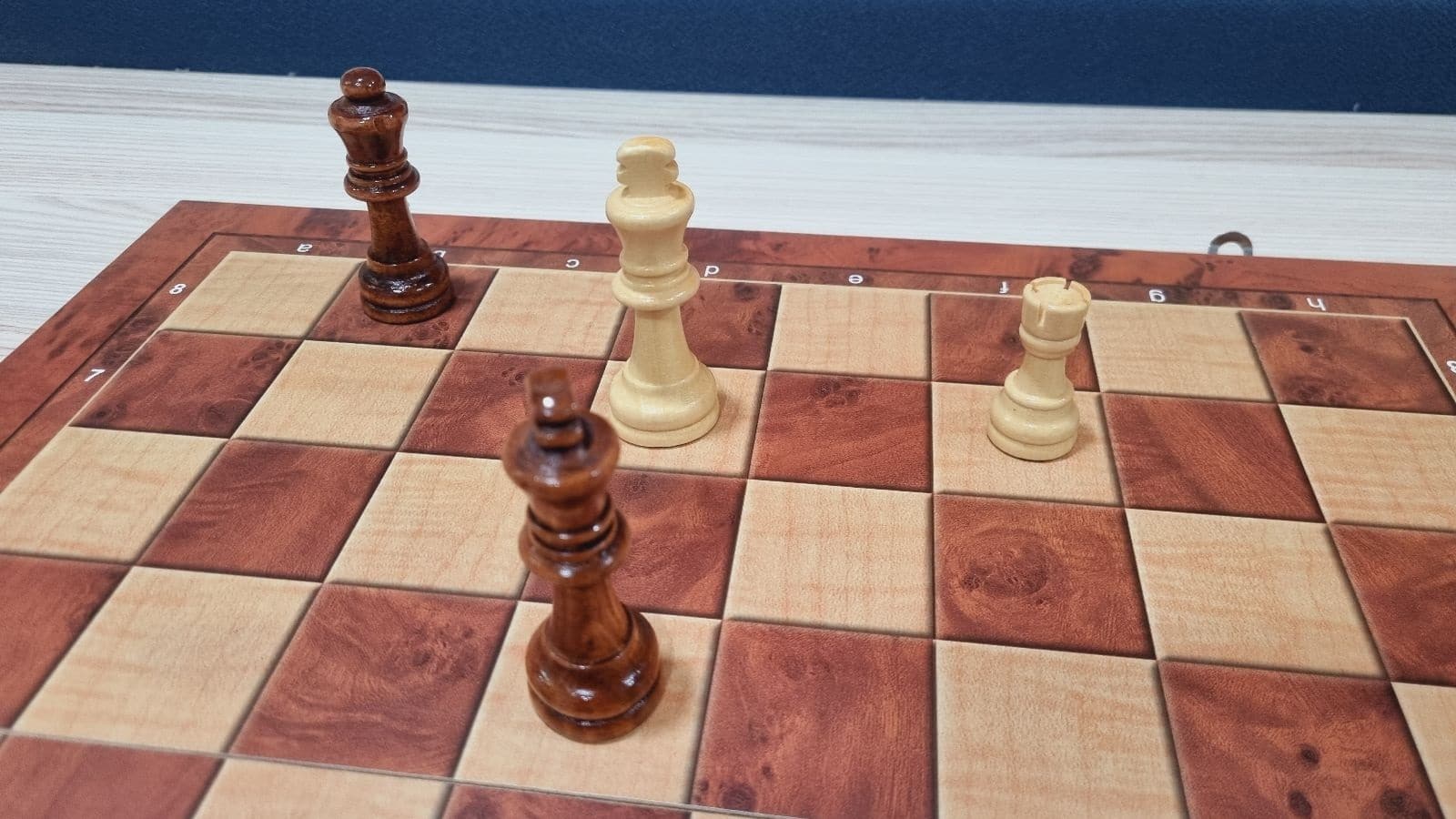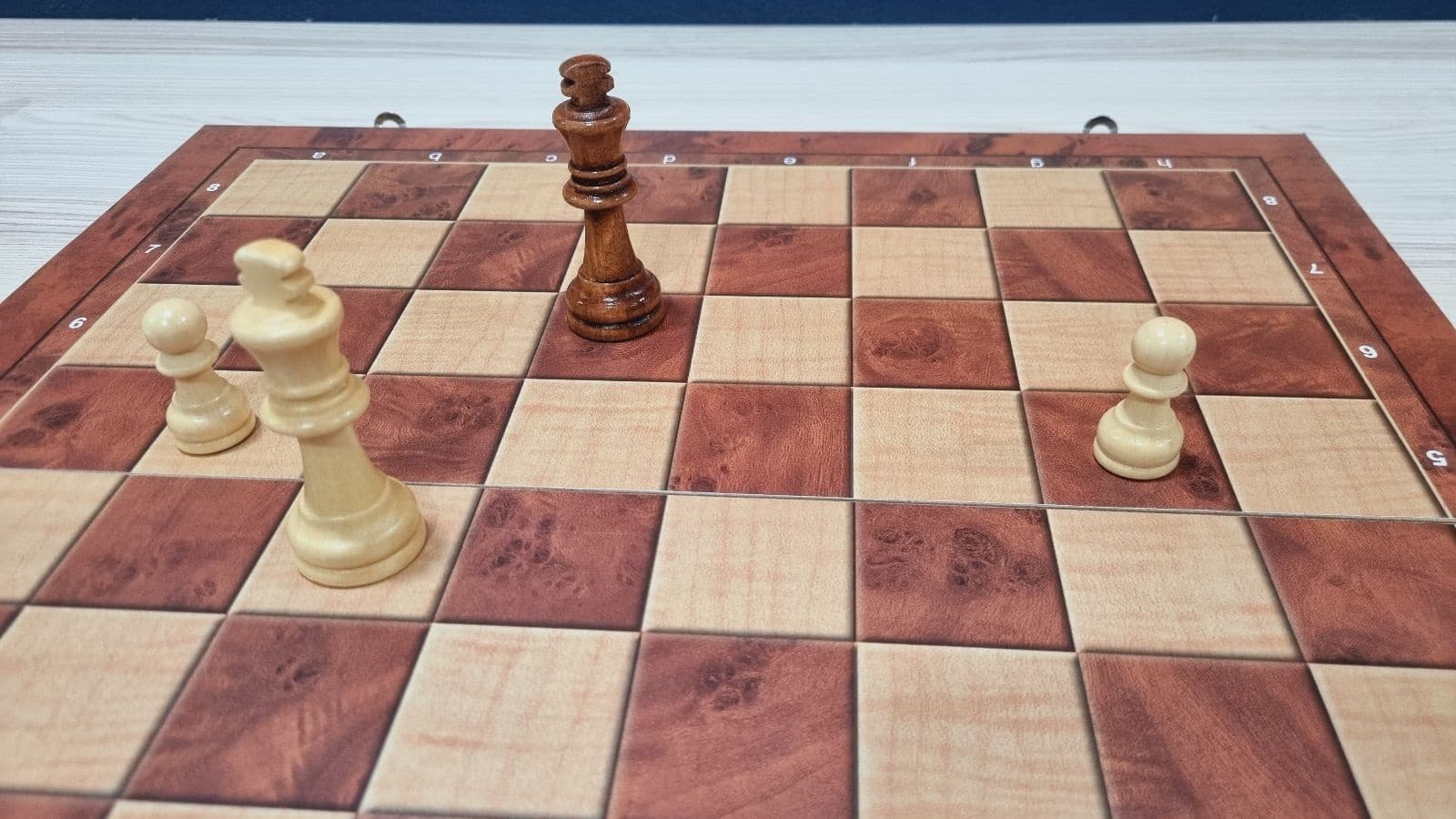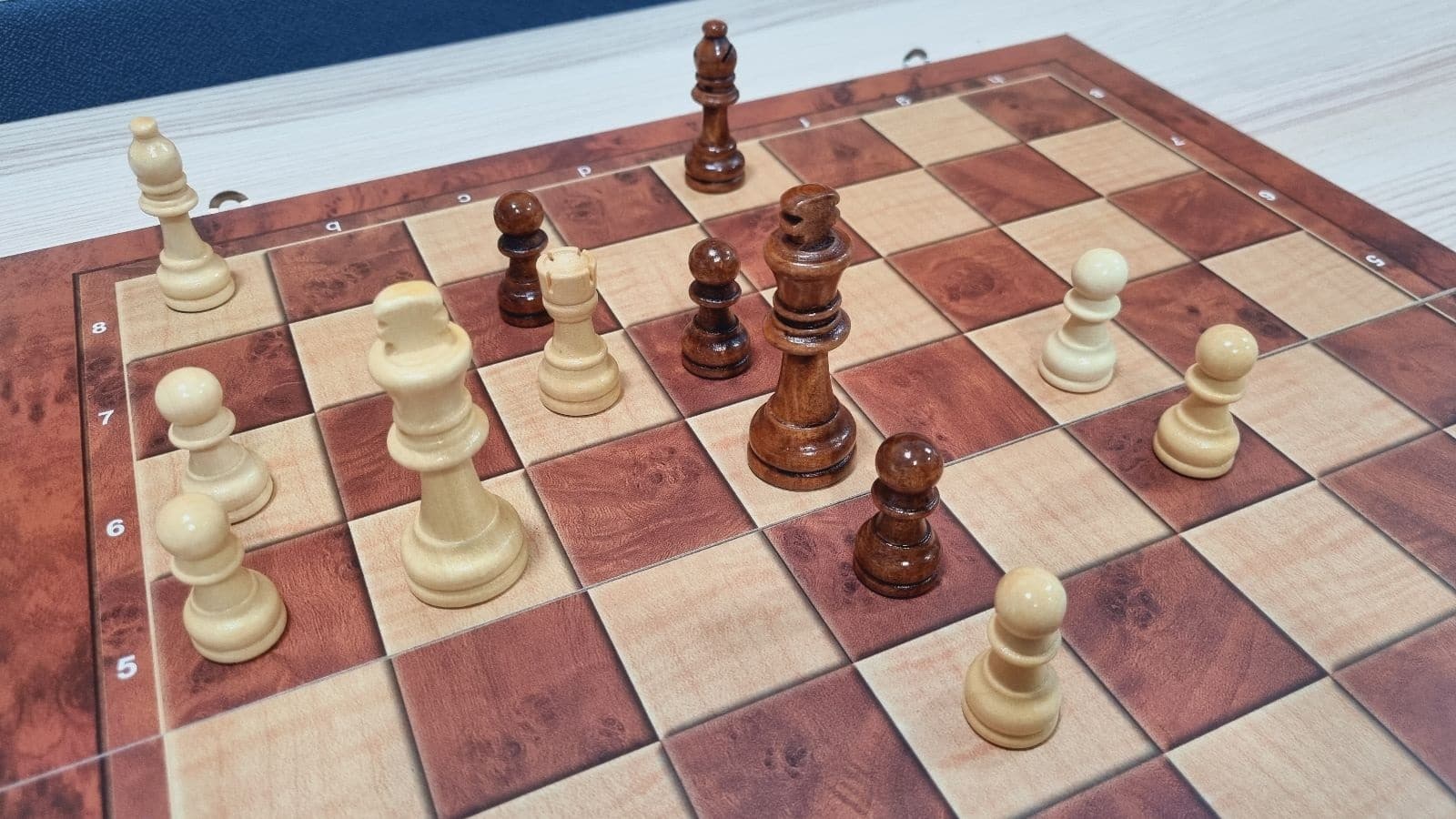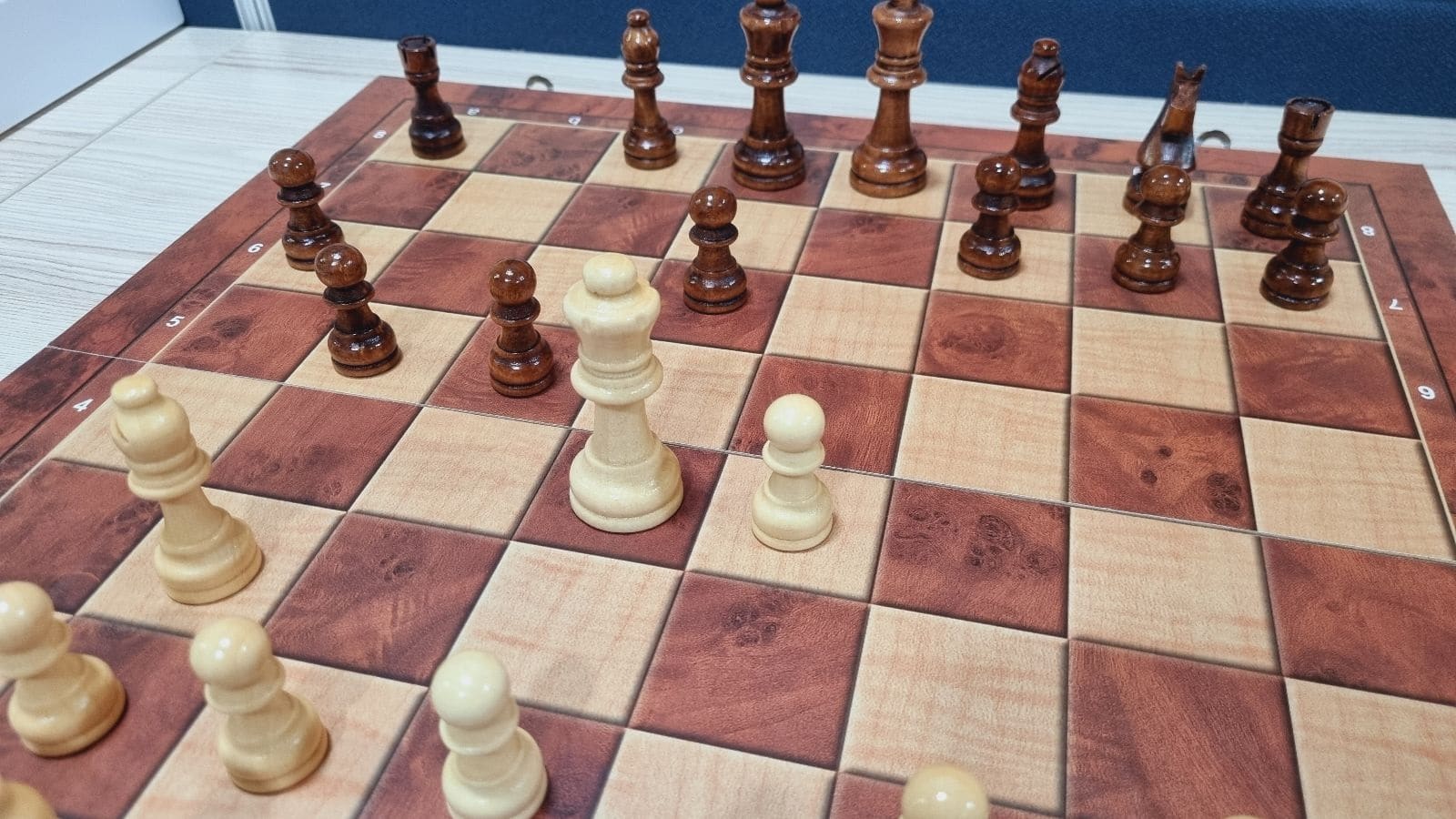
Chess Annotation is used to help describe the sequence of moves during a game of Chess, (no kidding!).
You may also hear it referred to as: "Annotated Chess", or the easier on the tongue "Chess Notation" ... ultimately, it's all one and the same thing.
While it can be tricky for some to learn, Chess Notation is very useful, as it allows accurate recording of a game, with the minimum of written work ...
This makes it easier to comment on games, or put Chess Puzzles in publications like Newspapers and Magazines.
Chess Annotation And The Chess Board
All Notation systems, mentioned on this page, are based on giving a unique reference to the squares on a Chess board.
You can see the board has an arrangement of letters (a to h) and numbers (1 to 8).
The Chess board itself has both Files and Ranks:
Three Types of Chess Annotation Systems
Okay, there have been many more attempts at recoding moves during a game, but three versions were definitely more popular:
Watch this video, which shows a few, random opening moves and then we'll compare those three systems:
1) Descriptive Chess Annotation System
Also known as English Notation, The Descriptive system's last revision named the individual chess pieces like this:
P = Pawn
N = kNight
B = Bishop
R = Rook
Q = Queen
K = King
As for the board, the chess annotation reference dependeds on the view of the player ... this actually led to two descriptions for each square:
|
Descriptive Notation
(Move. White ... Black)
|
In favor of the Descriptive Chess Annotation system, you get to know that a Pawn has been moved - the Algebraic system only provides a square's reference; there's no letter 'P' to highlight a Pawn has been moved.
The same goes with the other pieces ... take Move 2, for White or Black, and you can immediately see it was the King-side Knight that got moved.
The failings of the Descriptive system are, firstly, the cumbersome recording of each player's move, in comparison to the cleaner Algebraic system.
Secondly, it involves having to rotate the board around in your mind to juggle with the priority-view of each player ... The Algebraic system, on the other hand, has the notation fixed, just ONE WAY (as you'll see shortly).
2) Forsyth Chess Annotation System
The most common way the Forsyth system named the pieces was CAPITALS for White; lowercase letters for Black:
P (White) ... p (Black) = Pawn ... pawn
N (White) ... n (Black) = kNight ... knight
B (White) ... b (Black) = Bishop ... bishop
R (White) ... r (Black) = Rook ... rook
Q (White) ... q (Black) = Queen ... queen
K (White) ... k (Black) = King ... king
As for recording positions of the pieces on the board, the Forsyth system really earned it's points for being unique:
If you were living in Scotland in 1883, and happened to pick up a copy of the Glasgow Weekly Herald, on turning to the Chess games section, you'd be confronted with David Forstyh's system:
|
Forsyth Notation
(Rank. WHITE ... black)
|
While the Forsyth System is no longer in use, with modern Chess Game reporting, it still has a very modern purpose ...
If you've ever Copied & Pasted games of Chess into Fritz (e.g. Fritz 12), you might see the linear* Forsyth notation in part of the code:
* e.g. rnbqkb1r/1ppp1ppp/5n2/4p2P/p3P3/5N2/PPPP1PP1/RNBQKB1R
It's how Fritz is able to determine where to position the Pieces, in any given set up. Good, eh?
There was another version for naming the pieces which, instead of CAPITALS for White, lowercase for Black, it had ALL CAPITALS, but Black's had circles around them.
Based on our 4 moves, it would look something like this:

3) Algebraic Chess Annotation System
This system names the pieces in the following way:
N = kNight
B = Bishop
R = Rook
Q = Queen
K = King
Note that there is NO letter to distinguish the Pawn. Instead, a Pawn's for this Chess Annotation system, recorded movement is shown by the grid-reference of the square it ends up on.
This can be seen in the following image, along with the format for noting the other pieces:
|
Algebraic Notation
(Move. White ... Black)
|
The advantage of the Algebraic Notation system is it's much quicker to write down, which is a good thing if you're using pen and paper to record your match during a live Tournament/Competition.
Chess Annotation in the Modern Game
For a time, the Descriptive Notation system was considered best choice - and you can still find books that use this method to explain different strategies and cover historic games.
One such book is The Penguin Book of Chess Openings, by W. R. Hartston (published by Penguin Books, 1981).
Indeed, this was the book we referenced to recreate the Chess Openings that can be found on this website - in keeping with modern times, we altered these openings to the Algebraic system because ...
Of those three popular Chess Annotation systems, it was the third variant - the Algebraic Notation system - that finally rose to become the preferred method for recording matches in competitive matches.
It's the chosen method used by the World Chess Federation (FIDE), for its Tournaments and so, by default, the Algebraic Chess Annotation system is spreading itself across the globe as THE system to use for recording moves made during games of Chess.
And because FIDE uses it, we cover it in more depth, in our Beginner's Chess section (click here, to see!)
| Learn more about the Algebraic Chess Annotation system, Here. |