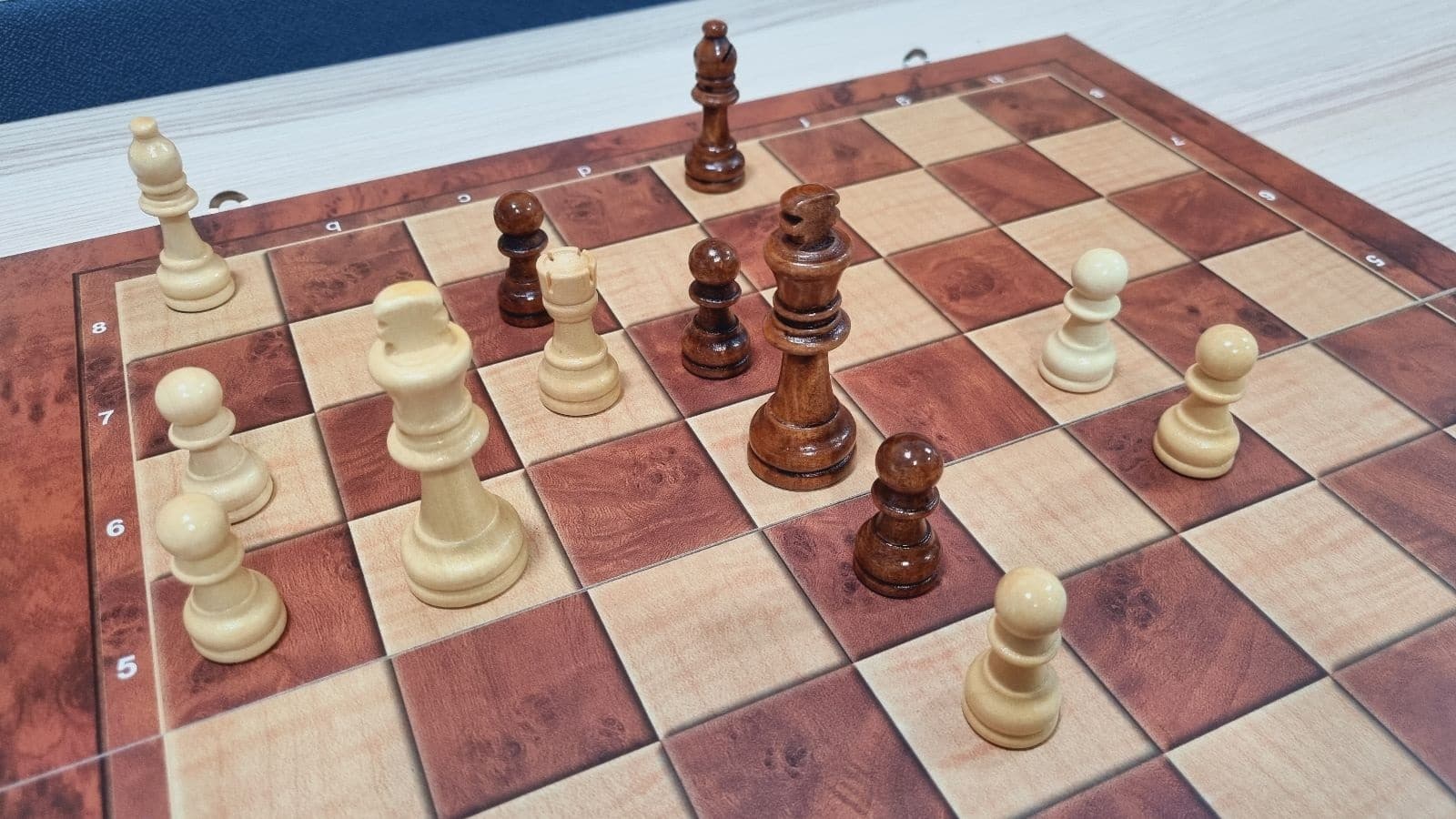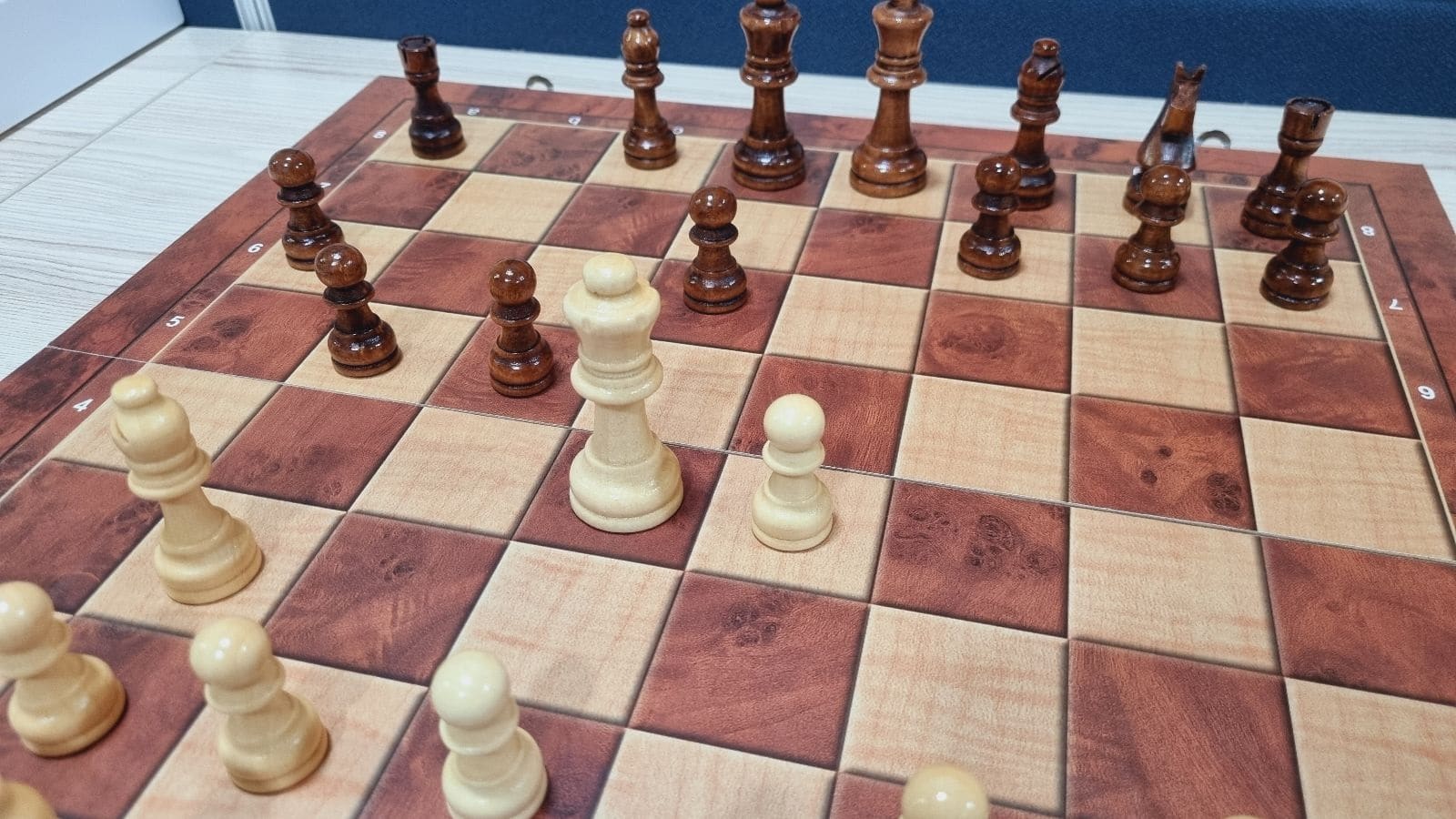
- A Pawn is said to be Weak if it's significantly vulnerable to attack.
- The following types are all considered to be Weak Pawns, which are ripe for targeting:
- If you own such Weak Pawns, as the five types just mentioned, then, providing enemy material cannot attack your Weak Pawn(s), their weakness is less of a problem to you.
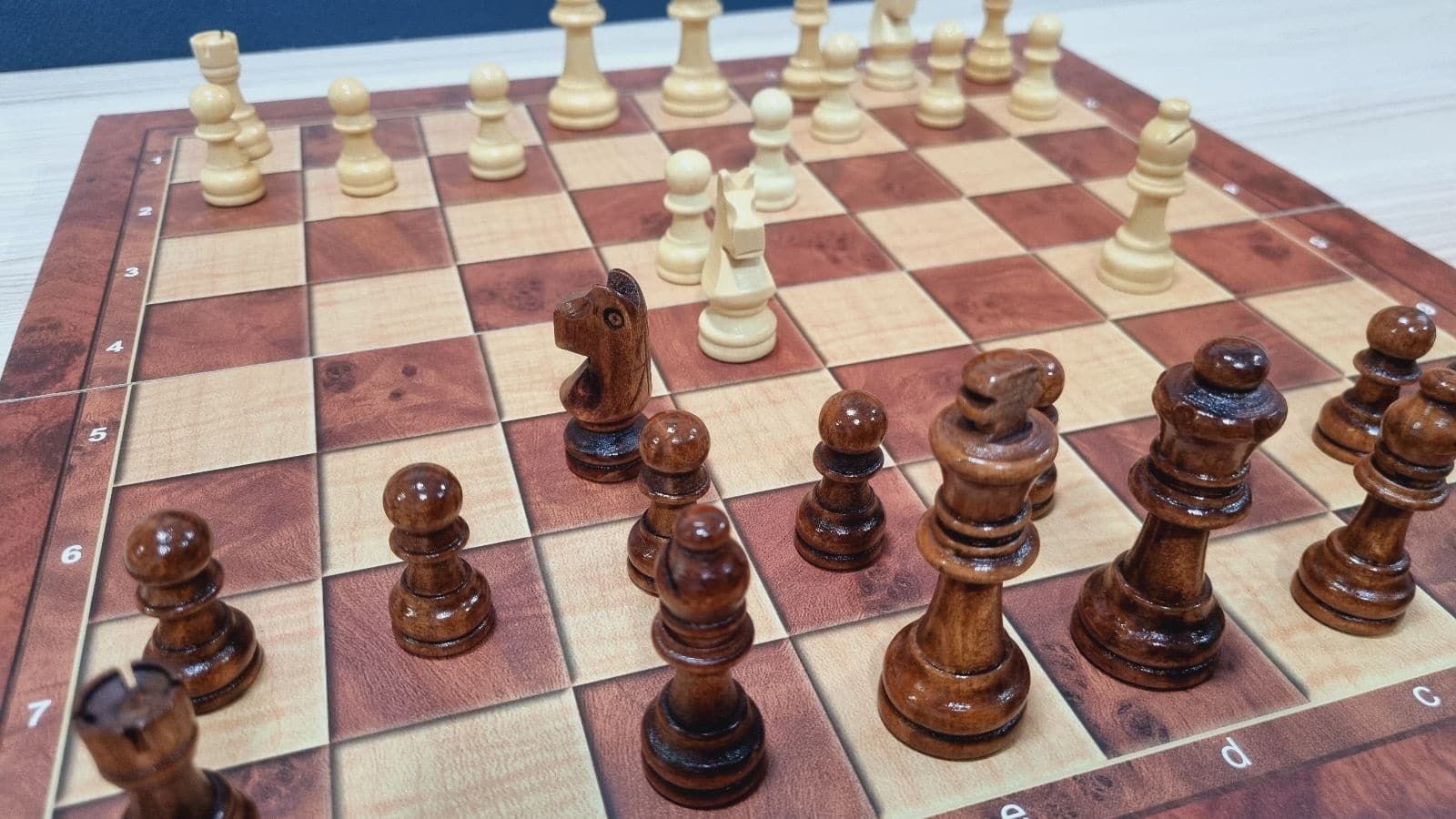
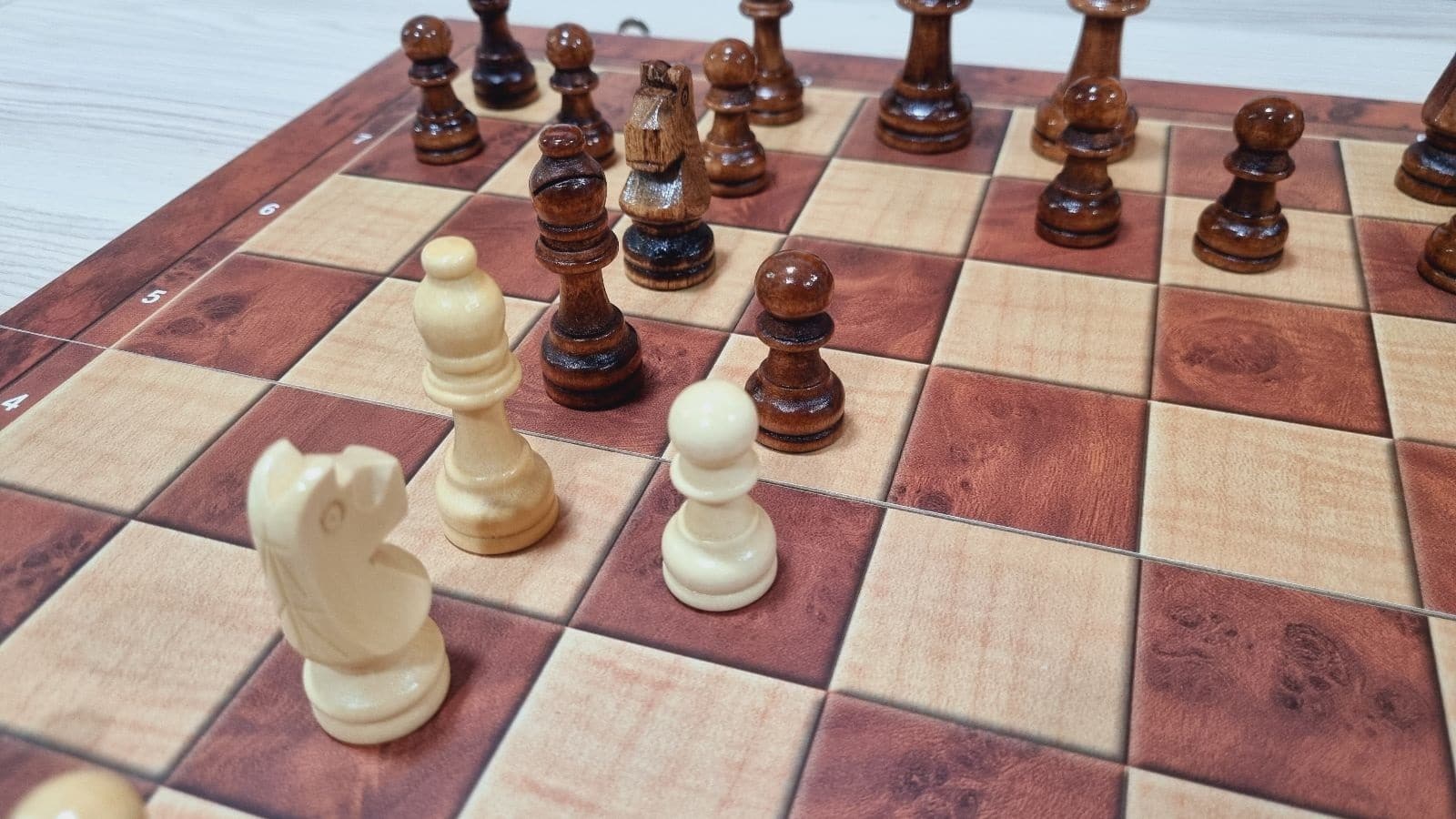
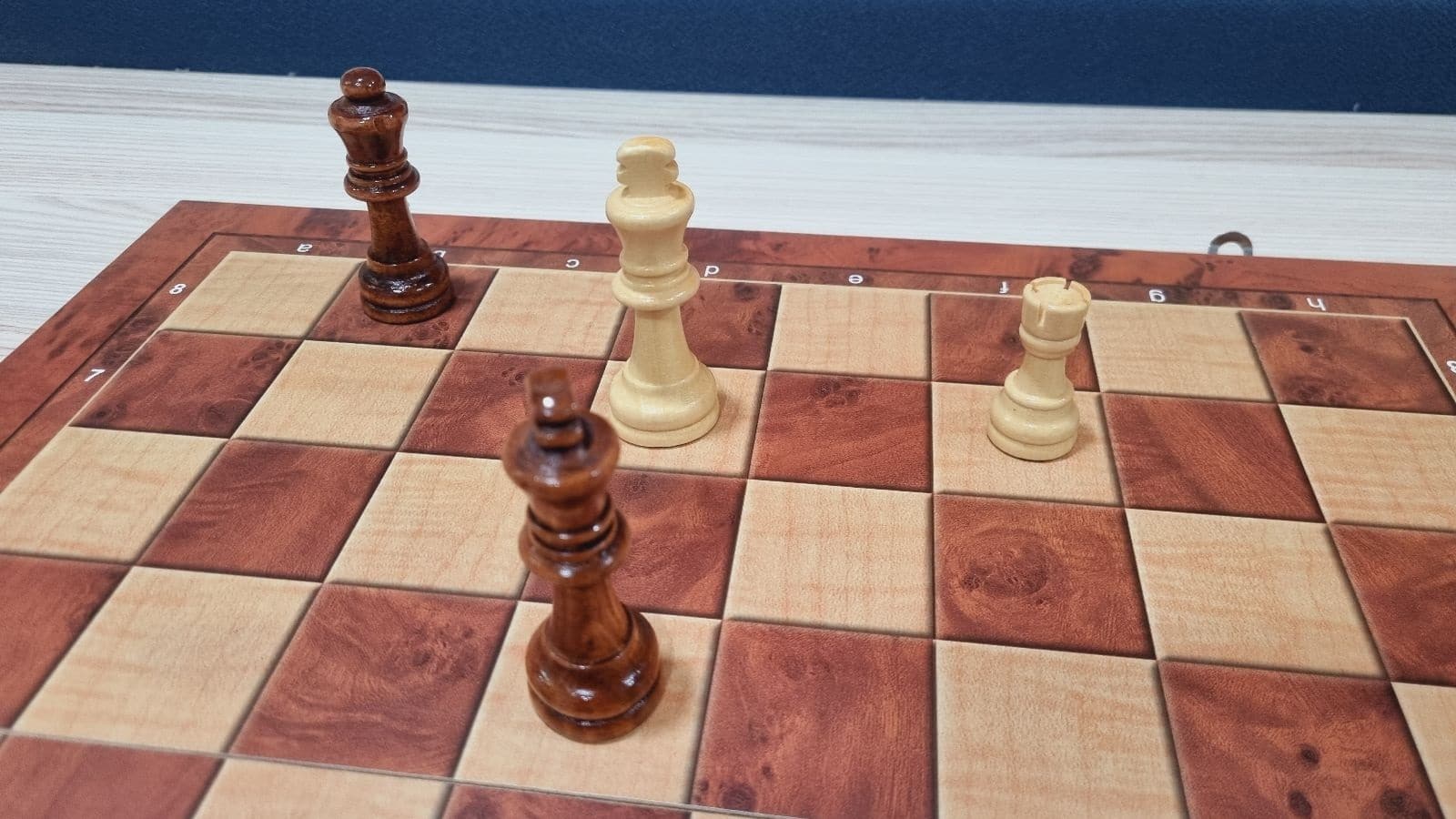
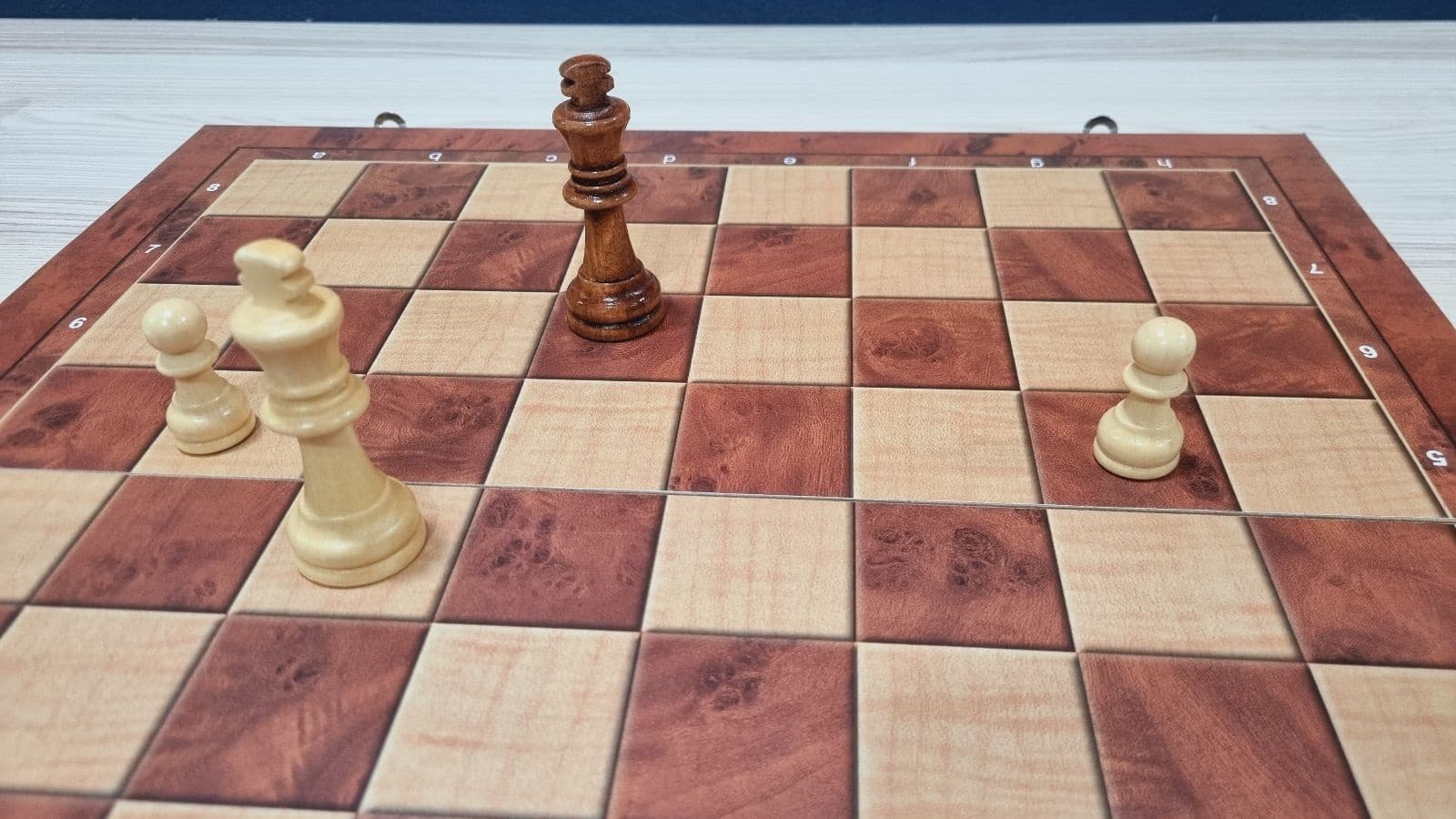
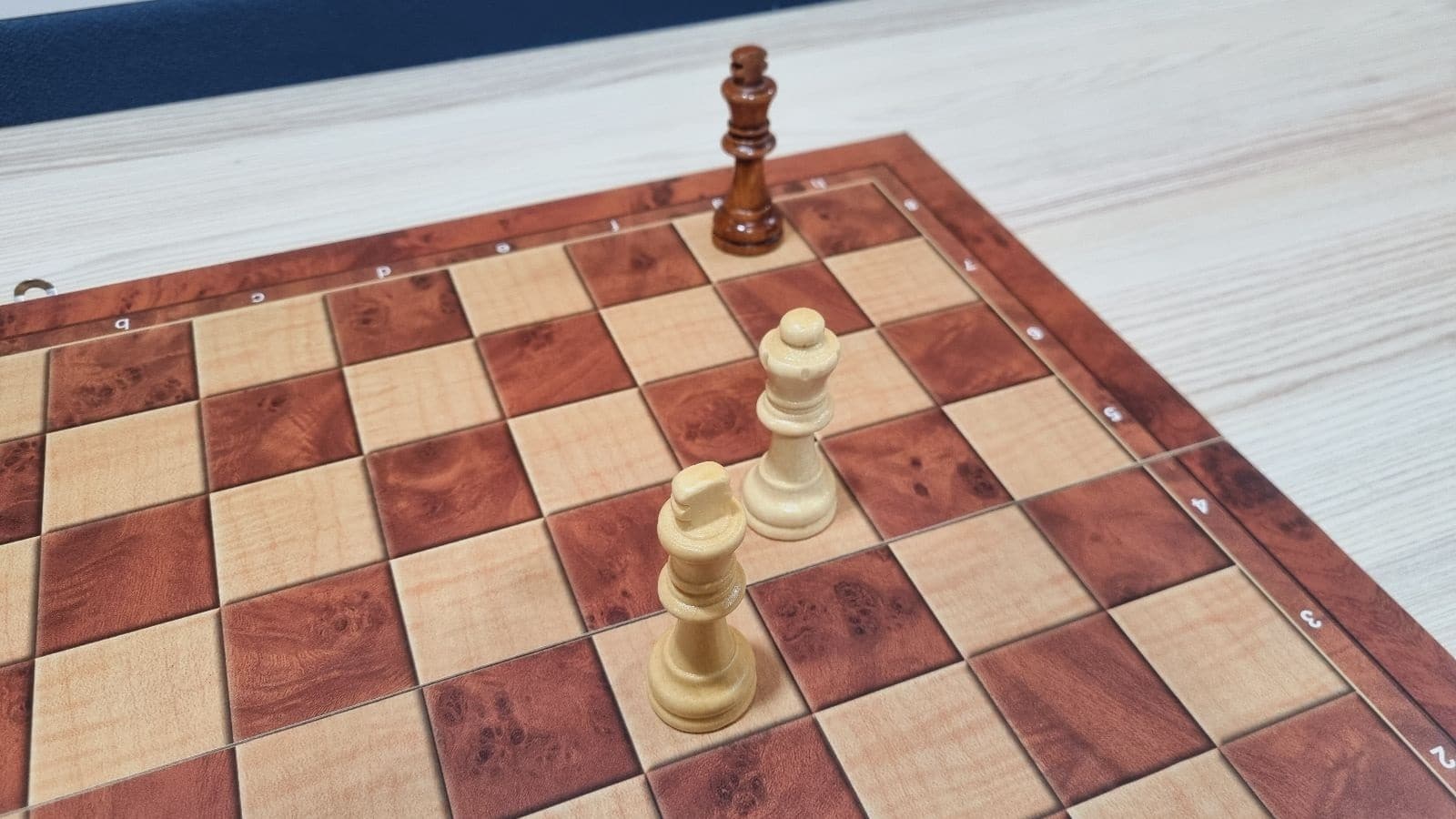
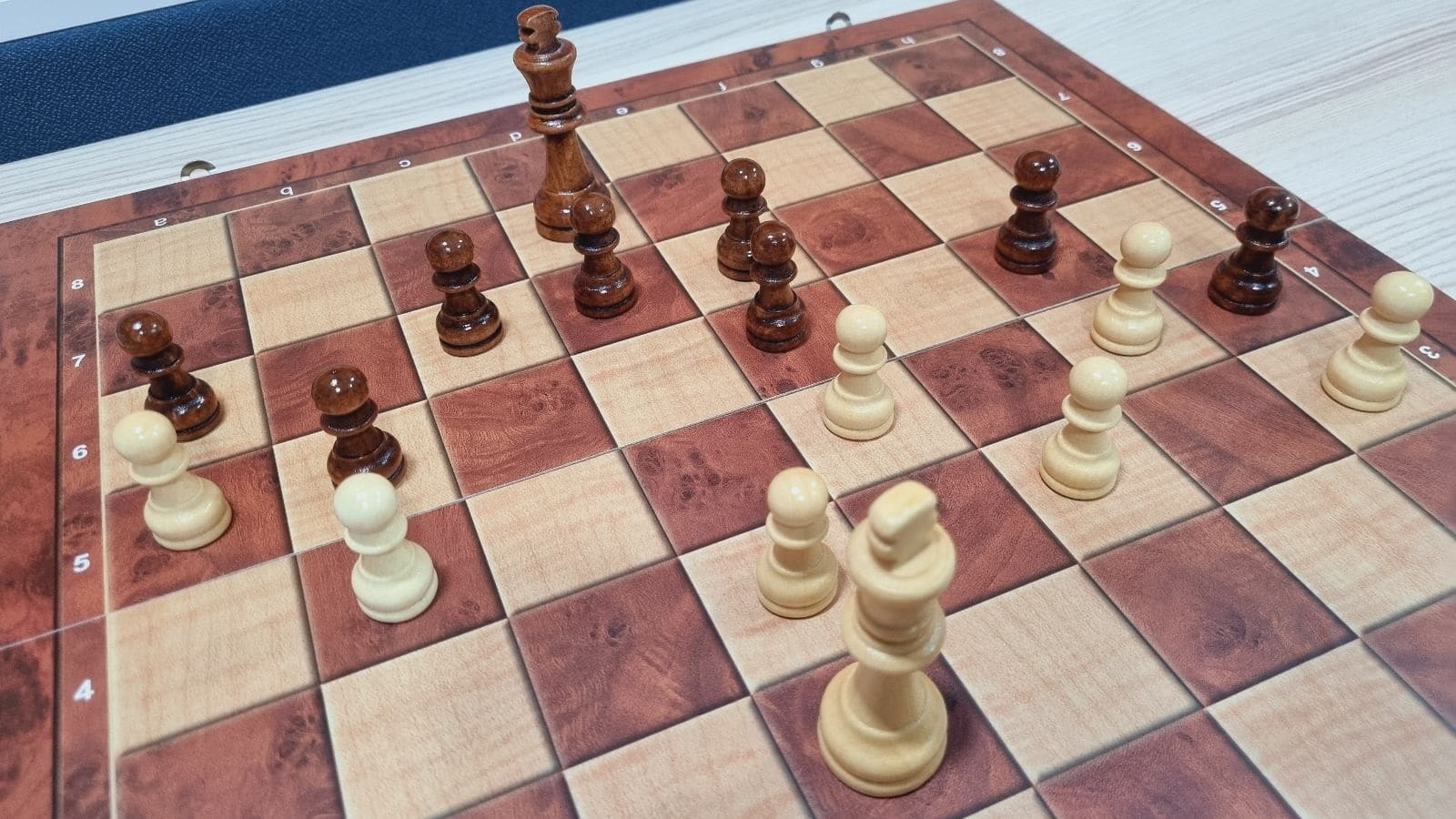
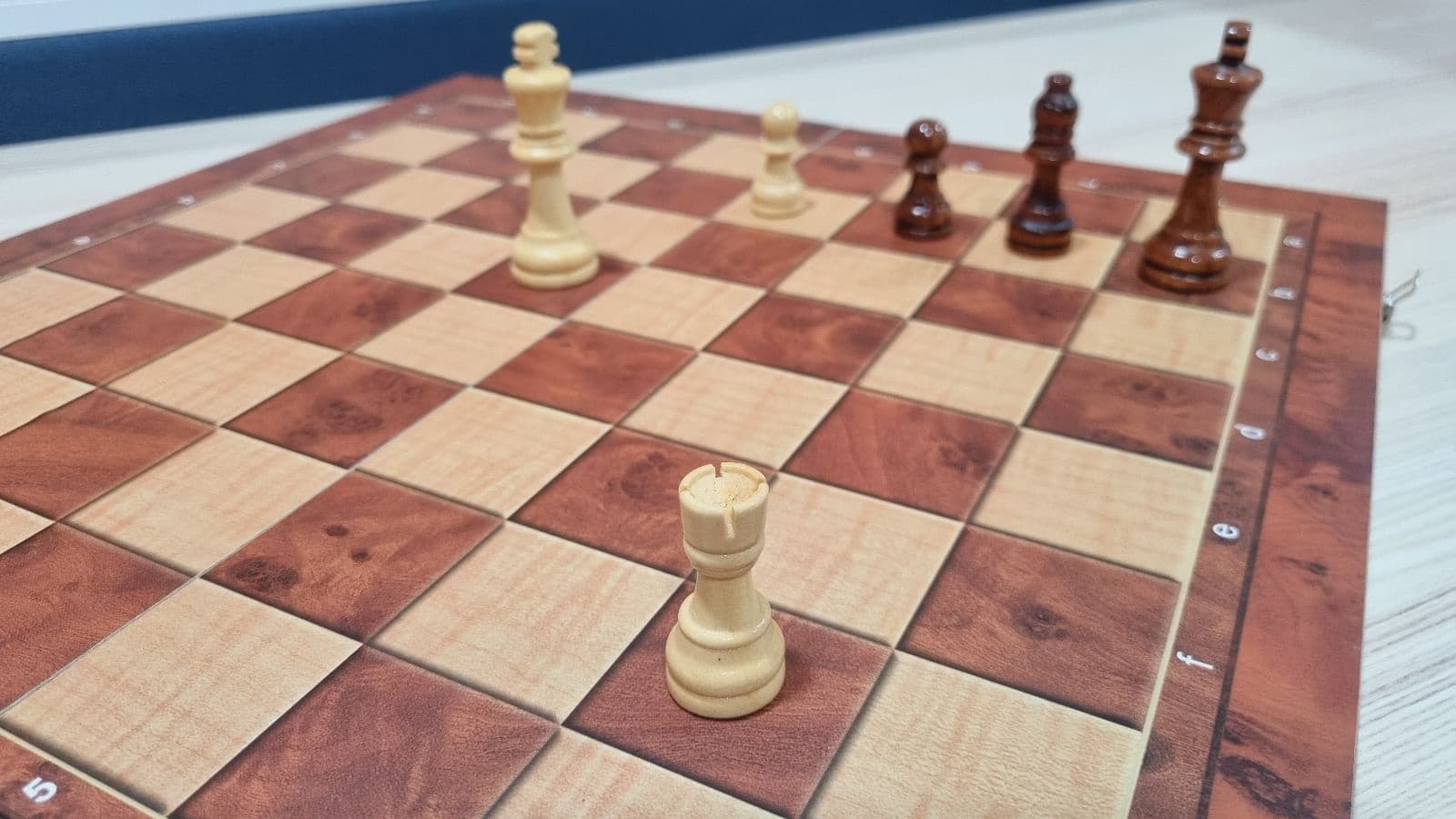
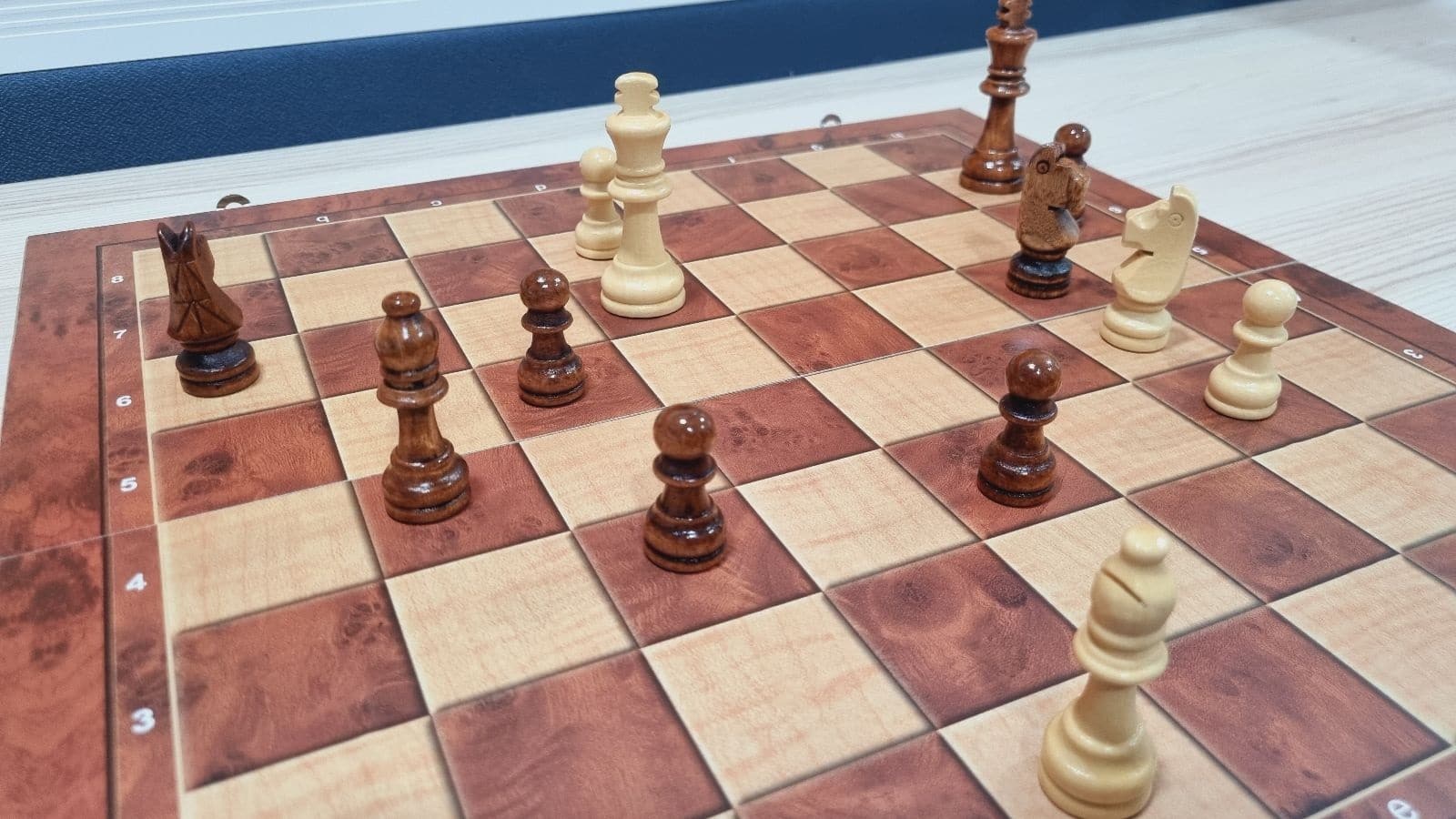
- You can use two Pawns to create Weak enemy Pawns, by attacking a Pawn Majority that numbers three enemy Pawns:
|
[ Start ]
[ 1 ]
[ 2 ]
[ 3 ]
[ 4 ]
[ Weak Pawns ]
|
2 White Pawns Attack 3 Black Pawns
|
|
-
Typical Weak Pawn outcomes, from 2-vs-3 Pawn attacks, which both feature in the last two images of the diagram above, are:
- Doubled Pawns;
- And smaller, enemy Pawn Islands.
-
Remember: the fewer Pawns in an Island, the weaker their strength.
- Enemy positions can be quick to collapse when Weak Pawns are targeted and attacked.
Seirawan Strategy Example (p138)
Diagram 84: White to play
Game: Petrosian-Barcza, Budapest, 1955
[Event "?"]
[Site "Budapest"]
[Date "1955.??.??"]
[Round "?"]
[White "Petrosian"]
[Black "Barcza"]
[Result "*"]
[SetUp "1"]
[FEN "2r1k3/2r1bp1p/1p3p2/1R1p3N/2qP1P2/4P3/R4KPP/1Q6 w - - 0 0"]
[PlyCount "31"]
1. Rxb6 Rc6 2. Rxc6 Rxc6 3. Ra8+ Kd7 4. Ra7+ Rc7 5. Rxc7+ Kxc7 6. Qxh7 Qa2+ 7.
Kf3 Qd2 8. Qb1 f5 9. Ng3 Bh4 10. Ne2 Be7 11. h3 Bb4 12. Ng3 Kc6 13. Nxf5 Kb5
14. Nd6+ Ka4 15. Nxf7 Ba3 16. Ne5 *
|
Fritz 12 (by ChessBase):
Copy & Paste Chess Games - in PGN format - directly into Fritz 12 ... Explore the Game
and/or Play from any position against Fritz!
Don't have Fritz? Learn More | Buy Now!
|
|
Seirawan Strategy Example (p139)
Diagram 85: White to play
[Event "?"]
[Site "?"]
[Date "????.??.??"]
[Round "?"]
[White "New game"]
[Black "?"]
[Result "*"]
[PlyCount "12"]
1. e4 e5 2. Nf3 Nc6 3. Nc3 Nf6 4. Bc4 Bc5 5. O-O O-O 6. d3 d6 *
Notes:
Diagram 85, which can be found on page 140, is achieved after Move 6, of the above PGN sequence.
The position is all setup for you to complete the moves in Fritz 12, as explained by Yasser Seirawan, on page 140-141.
|
Fritz 12 (by ChessBase):
Copy & Paste Chess Games - in PGN format - directly into Fritz 12 ... Explore the Game
and/or Play from any position against Fritz!
Don't have Fritz? Learn More | Buy Now!
|
|
Seirawan Strategy Example (p141)
Diagram 86: Black to play
Game: Reshevsky-Miagmasuren, Sousse, 1967
[Event "?"]
[Site "Sousse"]
[Date "1967.??.??"]
[Round "?"]
[White "Reshevsky"]
[Black "Miagmarsuren"]
[Result "*"]
[SetUp "1"]
[FEN "4r1k1/pp3pbp/2pqrnp1/3p4/PP1P4/1NNQP2P/2R2PP1/1R4K1 b - - 0 0"]
[PlyCount "22"]
1... b6 2. Nc1 Bh6 3. N1e2 Nh5 4. b5 Qd7 5. bxc6 Rxc6 6. Qb5 Rec8 7. Rbc1 R8c7
8. g4 a6 9. Qxa6 Nf6 10. Nxd5 Nxg4 11. Rxc6 Qxd5 12. Qa8+ *
|
Fritz 12 (by ChessBase):
Copy & Paste Chess Games - in PGN format - directly into Fritz 12 ... Explore the Game
and/or Play from any position against Fritz!
Don't have Fritz? Learn More | Buy Now!
|
|
Seirawan Strategy Example (p143)
Diagram 87: White to play
Game: Averbakh-Donner, Beverwijk, 1962
[Event "?"]
[Site "Beverwijk"]
[Date "1962.??.??"]
[Round "?"]
[White "Averbakh"]
[Black "Donner"]
[Result "*"]
[PlyCount "81"]
1. d4 d5 2. c4 e6 3. Nf3 Nf6 4. Nc3 Be7 5. cxd5 exd5 6. Bg5 c6 7. Qc2 g6 8. e3
Bf5 9. Bd3 Bxd3 10. Qxd3 O-O 11. O-O Re8 12. Bxf6 Bxf6 13. b4 Nd7 14. b5 Nb6
15. bxc6 bxc6 16. Rac1 Be7 17. Rc2 Bd6 18. Nb1 Rc8 19. Rfc1 Qf6 20. Nbd2 Rc7
21. g3 Rec8 22. Kg2 Qe7 23. e4 Bb4 24. h4 Qd8 25. e5 c5 26. dxc5 Rxc5 27. Rxc5
Rxc5 28. Rxc5 Bxc5 29. Nb3 Be7 30. Nbd4 Qc8 31. Qb5 Kf8 32. Nc6 Qb7 33. Nfd4 a6
34. Qa5 Ke8 35. Nxe7 Kxe7 36. Qc5+ Ke8 37. e6 Nc8 38. exf7+ Kxf7 39. Nc6 Kg7
40. Qd4+ Kh6 41. Qf6 *
Notes:
Diagram 87, which can be found on page 143, is achieved after Move 11, of the above PGN sequence.
|
Fritz 12 (by ChessBase):
Copy & Paste Chess Games - in PGN format - directly into Fritz 12 ... Explore the Game
and/or Play from any position against Fritz!
Don't have Fritz? Learn More | Buy Now!
|
|
- A Square is said to be Weak when it is totally undefended by Pawns and freely available for control, by either player.
- A Weak Square is also known as a Hole ... Look out for Holes, as they make for ideal spots for your Pieces.
- If you have a majority of Pawns and/or Pieces attacking any given square, then that square can be claimed as yours.
For instance, if you attack a square 3 times (with 3 separate units), while your opponent attacks the same square 2 times (with 2 separate units); if it came down to a straight fight, your superior attacking force would end up claiming that square ...
And, it's on that basis how you can determine who has control of any given square - tot-up all the squares controlled by each army and you can determine who has a territorial advantage, in any region of the board.
- On pages 146-147 of Winning Chess Strategies, Yasser Seirawan shows how Anatoly Karpov, in a game played against Walter Browne in 1972, was able to "play to create a weak square" ...
Once the weak square was "captured", Karpov wasted no time in getting all of his Pieces to it.
Seirawan Strategy Example (p146)
No Diagram in Book*
Game: Karpov-Browne, San Antonio, 1972
* This is the position reached after '9. Nge2'
[Event "?"]
[Site "San Antonio"]
[Date "1972.??.??"]
[Round "?"]
[White "Karpov"]
[Black "Browne"]
[Result "*"]
[PlyCount "17"]
1. c4 c5 2. b3 Nf6 3. Bb2 g6 4. Bxf6 exf6 5. Nc3 Bg7 6. g3 Nc6 7. Bg2 f5 8. e3
O-O 9. Nge2 *
Notes:
Seirawan doesn't provide a diagram for this particular example, but the Notation, as well as the explained moves, can be found on pages 146-147.
|
Fritz 12 (by ChessBase):
Copy & Paste Chess Games - in PGN format - directly into Fritz 12 ... Explore the Game
and/or Play from any position against Fritz!
Don't have Fritz? Learn More | Buy Now!
|
|
Seirawan Strategy Example (p147)
Diagram 88: White to play
Game: Fischer-Duran, Havana Olympiad, 1966
[Event "Havana Olympiad"]
[Site "Havana"]
[Date "1966.??.??"]
[Round "?"]
[White "Fischer"]
[Black "Duran"]
[Result "*"]
[SetUp "1"]
[FEN "r1bq1rk1/pp2npbp/2npp1p1/2p5/3PP3/2P2NP1/PP3PBP/RNBQ1RK1 w - - 0 0"]
[PlyCount "5"]
1. dxc5 dxc5 2. Qe2 b6 3. e5 *
|
Fritz 12 (by ChessBase):
Copy & Paste Chess Games - in PGN format - directly into Fritz 12 ... Explore the Game
and/or Play from any position against Fritz!
Don't have Fritz? Learn More | Buy Now!
|
|
Seirawan Strategy Example (p148)
Diagram 89: Black to play
Game: Karpov-Mecking, Hastings, 1971-72
[Event "?"]
[Site "Hastings"]
[Date "1971.??.??"]
[Round "?"]
[White "Karpov"]
[Black "Mecking"]
[Result "*"]
[SetUp "1"]
[FEN "1r1b1rk1/1p3ppp/3p4/p2BpP2/P3P1PP/1P6/1P1K4/2R4R b - - 0 0"]
[PlyCount "22"]
1... g5 2. fxg6 hxg6 3. Kd3 Kg7 4. h5 Bb6 5. Rh3 Bc5 6. Rf1 f6 7. hxg6 Kxg6 8.
Rfh1 Rfe8 9. Rh7 Kg5 10. Ke2 Kf4 11. R1h3 Bd4 12. Rg7 *
|
Fritz 12 (by ChessBase):
Copy & Paste Chess Games - in PGN format - directly into Fritz 12 ... Explore the Game
and/or Play from any position against Fritz!
Don't have Fritz? Learn More | Buy Now!
|
|
Seirawan Strategy Example (p150)
Diagram 90:Black to play
[Event "?"]
[Site "?"]
[Date "????.??.??"]
[Round "?"]
[White "New game"]
[Black "?"]
[Result "*"]
[SetUp "1"]
[FEN "rn1qkbnr/pp3ppp/2p1p3/3pP3/3P1P2/3Q4/PPP3PP/RNB1K1NR b KQkq - 0 1"]
[PlyCount "0"]
*
Notes:
The board setup, for Diagram 90 (p150), is all ready for you to make the moves, in Fritz 12, as given and explained by Yasser Seirawan, on page 151.
|
Fritz 12 (by ChessBase):
Copy & Paste Chess Games - in PGN format - directly into Fritz 12 ... Explore the Game
and/or Play from any position against Fritz!
Don't have Fritz? Learn More | Buy Now!
|
|
Seirawan Strategy Example (p152)
Diagram 91: Black to play
Game: Karpov-Spassky, Leningrad, 1974, 9th Match Game
[Event "?"]
[Site "Leningrad"]
[Date "1974.??.??"]
[Round "9"]
[White "Karpov"]
[Black "Spassky"]
[Result "*"]
[PlyCount "69"]
1. e4 c5 2. Nf3 e6 3. d4 cxd4 4. Nxd4 Nf6 5. Nc3 d6 6. Be2 Be7 7. O-O O-O 8. f4
Nc6 9. Be3 Bd7 10. Nb3 a5 11. a4 Nb4 12. Bf3 Bc6 13. Nd4 g6 14. Rf2 e5 15. Nxc6
bxc6 16. fxe5 dxe5 17. Qf1 Qc8 18. h3 Nd7 19. Bg4 h5 20. Bxd7 Qxd7 21. Qc4 Bh4
22. Rd2 Qe7 23. Rf1 Rfd8 24. Nb1 Qb7 25. Kh2 Kg7 26. c3 Na6 27. Re2 Rf8 28. Nd2
Bd8 29. Nf3 f6 30. Rd2 Be7 31. Qe6 Rad8 32. Rxd8 Bxd8 33. Rd1 Nb8 34. Bc5 Rh8
35. Rxd8 *
Notes:
Diagram 91, which can be found on page 153, is achieved after White's 24th Move, of the above PGN sequence.
|
Fritz 12 (by ChessBase):
Copy & Paste Chess Games - in PGN format - directly into Fritz 12 ... Explore the Game
and/or Play from any position against Fritz!
Don't have Fritz? Learn More | Buy Now!
|
|
- On pages 155-158 of Winning Chess Strategies, Yasser Seirawan shows how entire lines of squares, rather than any individual square, can become vulnerable to enemy penetration.
Seirawan gives Diagrams 92 & 93, both on page 155, as quick examples of Lines of Weak Squares, followed by a lengthier example involving a game between Steinitz-Blackburne, London, 1876.
Seirawan Strategy Example (p155)
Diagram 92
[Event "?"]
[Site "?"]
[Date "????.??.??"]
[Round "?"]
[White "New game"]
[Black "?"]
[Result "*"]
[SetUp "1"]
[FEN "5r1k/2q1r1pp/1pn2p2/p1p1p3/P1N1P3/2PR1P2/1P1R2PP/3Q2K1 w - - 0 0"]
[PlyCount "0"]
*
Notes:
Seirawan doesn't give any actual moves, for Diagram 92, but it's here for you to Copy to Fritz 12 and explore yourself, if you wish.
|
Fritz 12 (by ChessBase):
Copy & Paste Chess Games - in PGN format - directly into Fritz 12 ... Explore the Game
and/or Play from any position against Fritz!
Don't have Fritz? Learn More | Buy Now!
|
|
Seirawan Strategy Example (p155)
Diagram 93: White to play
[Event "?"]
[Site "?"]
[Date "????.??.??"]
[Round "?"]
[White "New game"]
[Black "?"]
[Result "*"]
[SetUp "1"]
[FEN "6k1/1bq4p/1p4p1/p1p2p2/P1P5/1P3P2/1B1Q2PP/6K1 w - - 0 0"]
[PlyCount "0"]
*
Notes:
The board setup, for Diagram 93 (p155), is all ready for you to make the move, in Fritz 12, as given and explained by Yasser Seirawan, on page 155.
|
Fritz 12 (by ChessBase):
Copy & Paste Chess Games - in PGN format - directly into Fritz 12 ... Explore the Game
and/or Play from any position against Fritz!
Don't have Fritz? Learn More | Buy Now!
|
|
Seirawan Strategy Example (p155)
Diagram 94: White to play
Game: Steinitz-Blackburne, London, 1876
[Event "?"]
[Site "London"]
[Date "1876.??.??"]
[Round "?"]
[White "Steinitz"]
[Black "Blackburne"]
[Result "*"]
[PlyCount "67"]
1. e4 e5 2. Nf3 Nc6 3. Bb5 a6 4. Ba4 Nf6 5. d3 d6 6. c3 Be7 7. h3 O-O 8. Qe2
Ne8 9. g4 b5 10. Bc2 Bb7 11. Nbd2 Qd7 12. Nf1 Nd8 13. Ne3 Ne6 14. Nf5 g6 15.
Nxe7+ Qxe7 16. Be3 N8g7 17. O-O-O c5 18. d4 exd4 19. cxd4 c4 20. d5 Nc7 21. Qd2
a5 22. Bd4 f6 23. Qh6 b4 24. g5 f5 25. Bf6 Qf7 26. exf5 gxf5 27. g6 Qxg6 28.
Bxg7 Qxh6+ 29. Bxh6 Rf6 30. Rhg1+ Rg6 31. Bxf5 Kf7 32. Bxg6+ hxg6 33. Ng5+ Kg8
34. Rge1 *
Notes:
Diagram 94, which can be found on page 157, is achieved after White's 22nd Move, of the above PGN sequence.
|
Fritz 12 (by ChessBase):
Copy & Paste Chess Games - in PGN format - directly into Fritz 12 ... Explore the Game
and/or Play from any position against Fritz!
Don't have Fritz? Learn More | Buy Now!
|
|